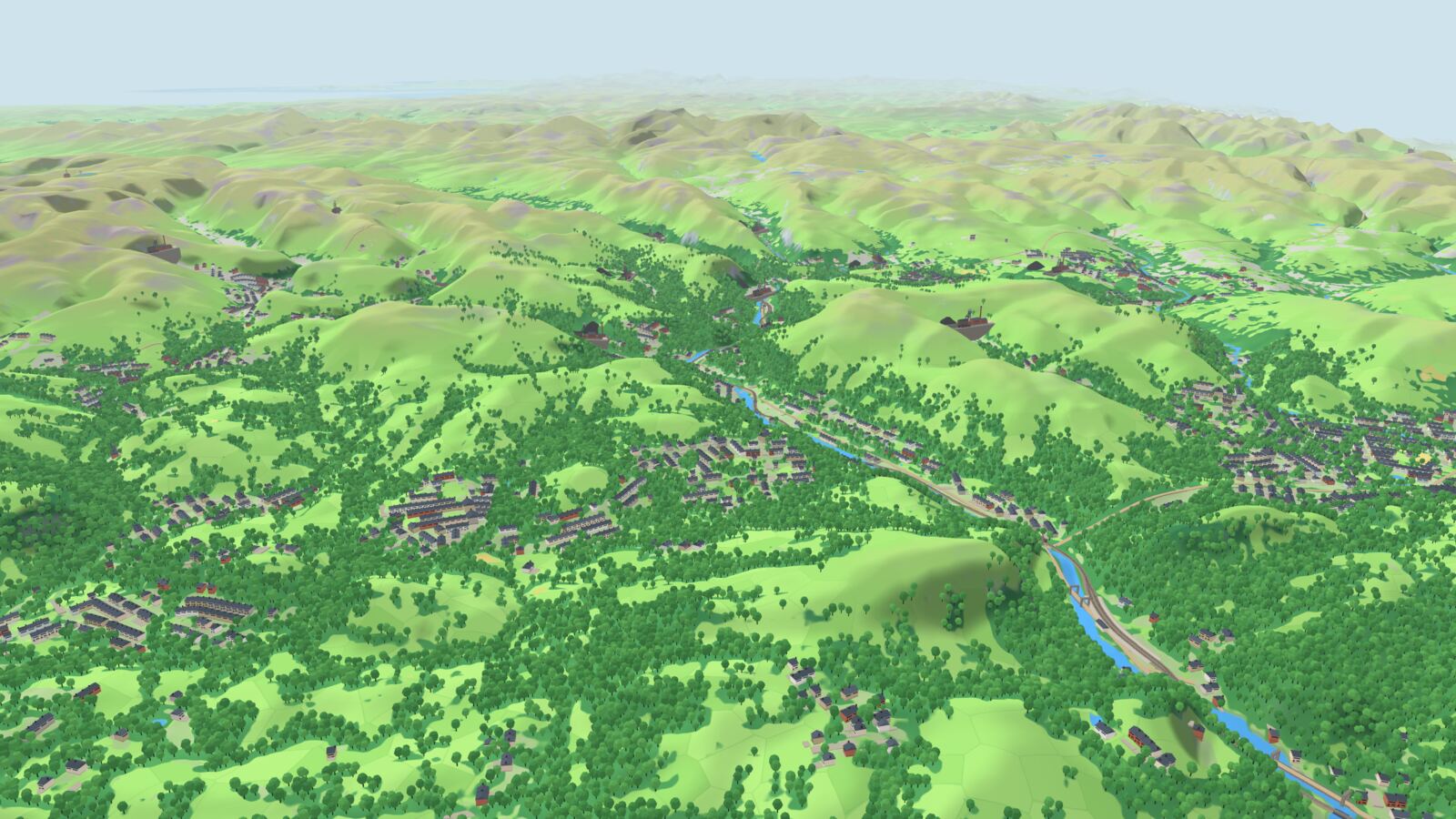
The real Wales
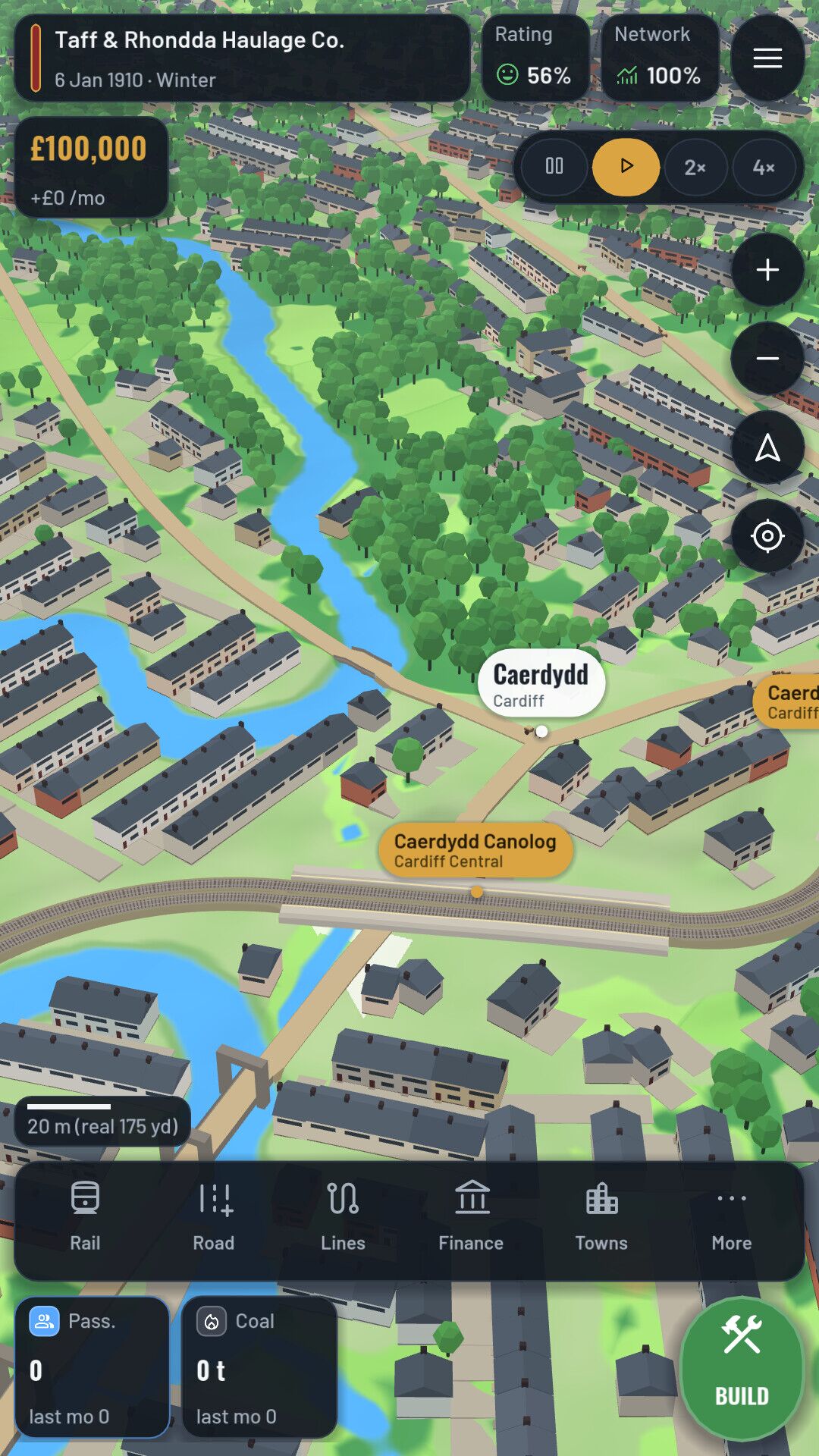
The whole country from real height data: valleys, mountains, rivers and coast, from the Rhondda to Snowdonia and Anglesey. Place names in Welsh and English, or either.
Out now on Google Play
Build the railways of Wales from 1910 and watch the Valleys grow around them.
A transport tycoon set in Wales
The Valleys are full of collieries and terraced streets, and Cardiff is the busiest coal port in the world. You have £100,000, a depot and a dream.
Lay track up the valleys, run coal down to the docks, carry miners to work and families to the seaside, and grow your company through a century of change, from steam to tram-trains.
Rather start later? Pick your own town on the map and begin in 1910, 1960, 1985 or 2000, on a blank map or on a railway that's already there.

What's in it
Everything you need to run a railway empire from your pocket, in a country that's really there.
The whole country from real height data: valleys, mountains, rivers and coast, from the Rhondda to Snowdonia and Anglesey. Place names in Welsh and English, or either.
Draw track as smooth curves with live cost, gradient and curve radius. Bridges, tunnels and cuttings, stations with up to eight platforms, double track with automatic signals and flat junctions with a diamond crossing, depots and path signals. Premium's Auto route finds and lays a whole route for you, along your own track where it can, and that part is free.
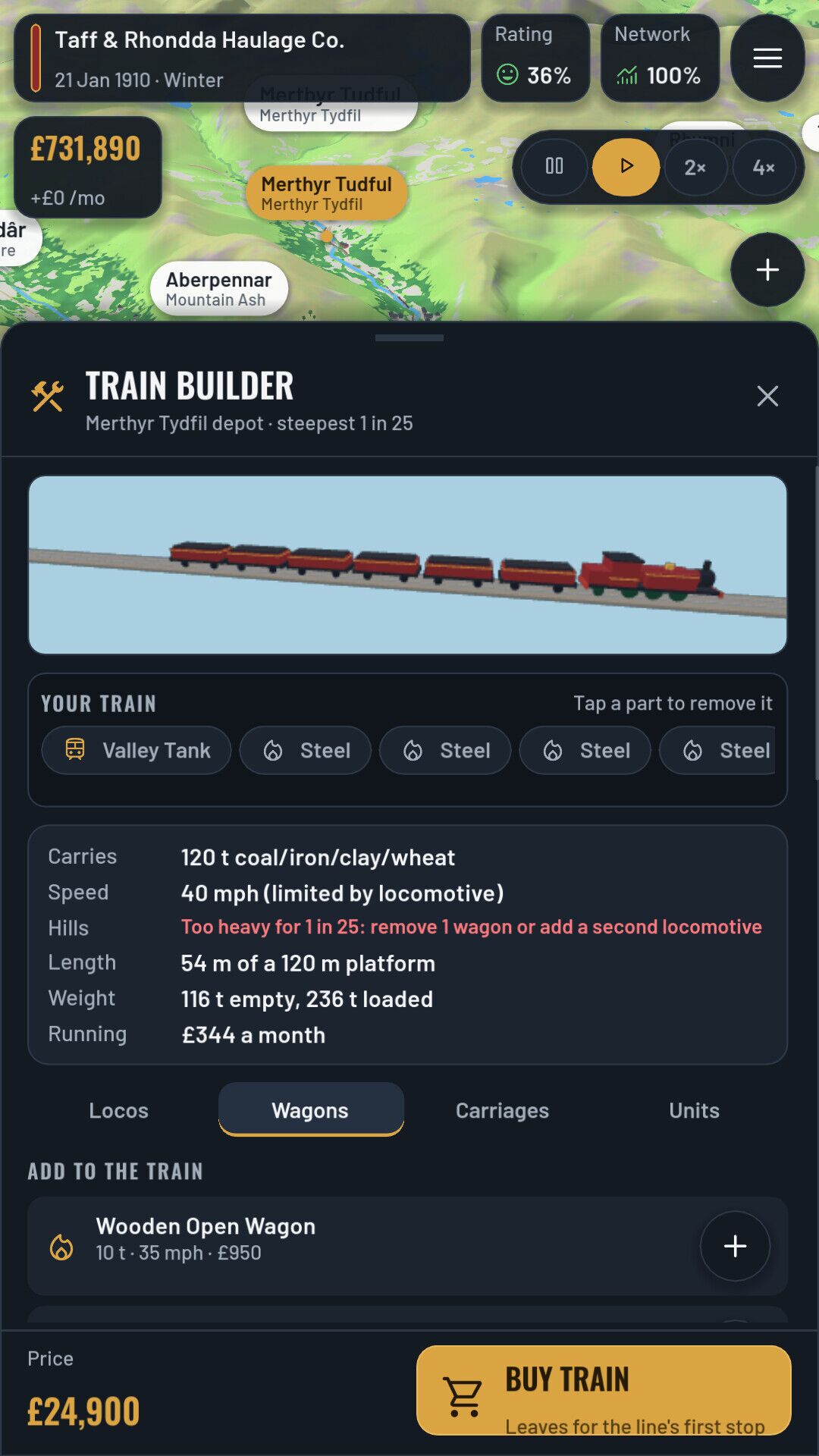
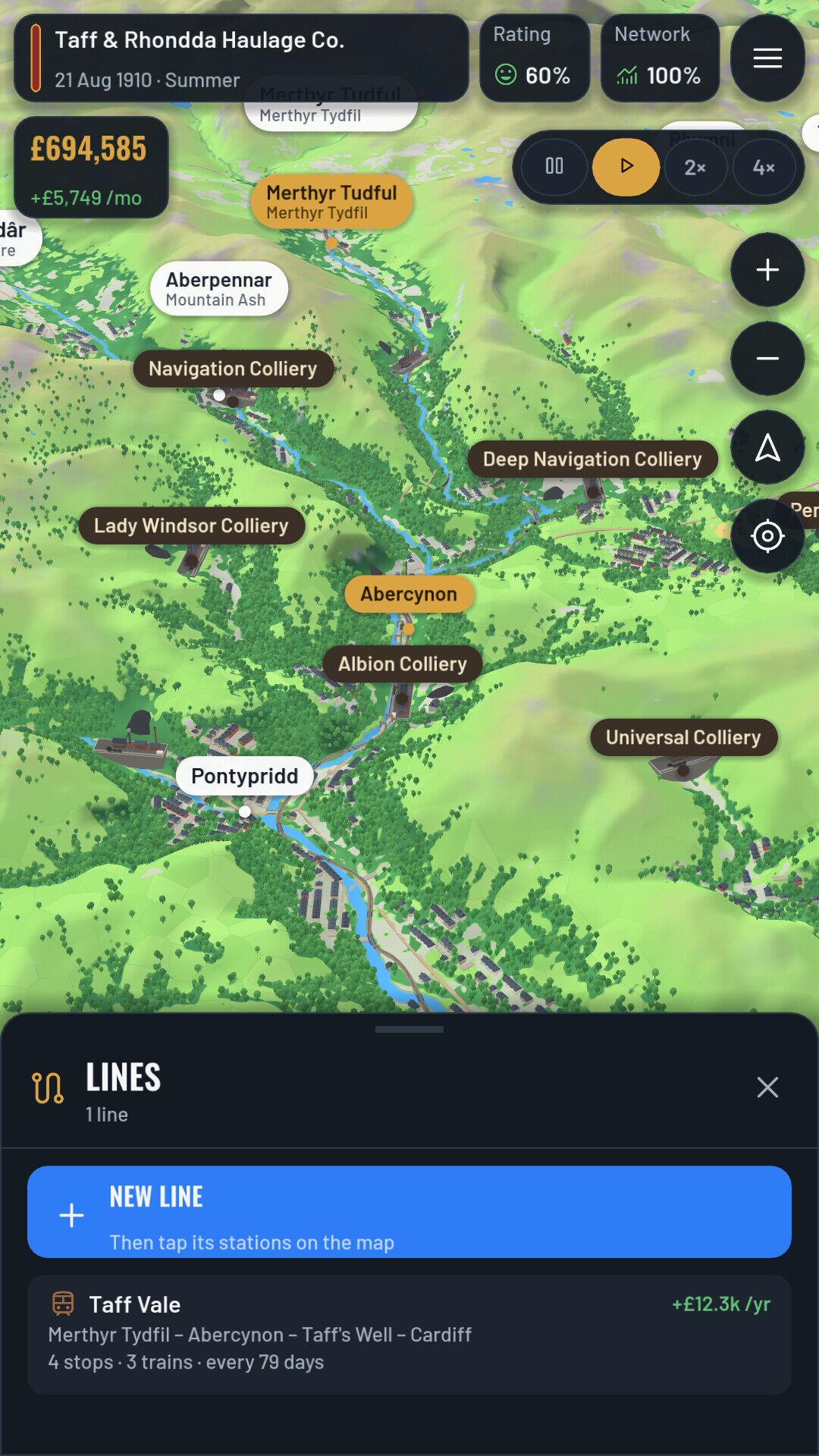
A full line manager with stops, a platform for each stop, waypoints and even spacing. Steam, diesel and electric trains through the eras, built carriage by carriage, ageing and breaking down until you renew, lease or auction them.
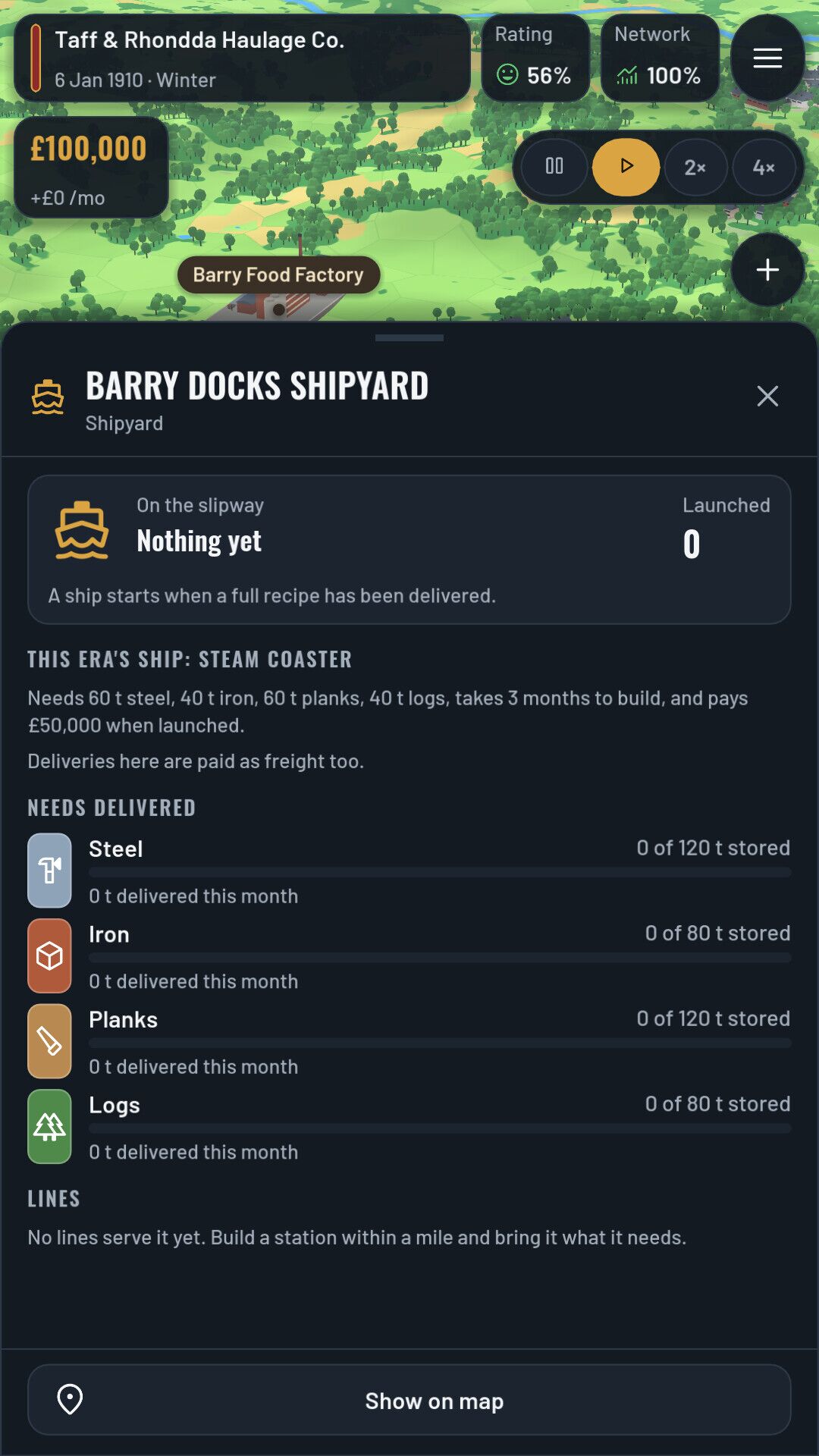
Coal, iron, steel, slate, bricks, timber, food and more in real supply chains, and a shipyard at Barry Docks that launches the ships you supplied, and cargo ships from coasters to container feeders.
From horse carts and charabancs to coaches and HGVs, on the free lanes of 1910 or on roads of your own.
Two world wars, the Depression and the decline of coal change what pays and what's wanted. Towns grow when you serve them well, and their streets spread across the map.
From your first month, a computer-run rival company opens in a part of Wales you don't serve, and more may follow. Share track for a fee, win passengers with faster, cheaper, more frequent trains, buy exclusive rights to a town, and buy a rival out when it gets into trouble. They sail to Ireland and take to the air, and they talk back, too. Pay for through running over their track, or haggle over the price of access. Switch them off to play alone.
Research new engines, better track and the wires, one project at a time. Set a budget every April, borrow for a term, and deal with strikes, landslips and fuel price spikes as they come.
Watch the towns light up at dusk, then go dark in the wartime blackout as searchlights sweep the docks. Carry soldiers from camp to port on troop trains when the War Office asks.
Paint your trains in historical liveries from chocolate and cream to rail blue, or design your own, by train, by line or for the whole company, and name your locomotives on a brass plate.
Plays in portrait or landscape, with controls built for touch, autosave, and a battery saver for long journeys.
No intrusive ads, no pay-to-win, no accounts. Fully offline: no internet needed and no data collected. Reminders are opt-in and made on your phone.
Beta 0.2.0
A new way to start, a railway to join, rivals on the sea and in the air, and reasons to come back tomorrow. Read the full changelog.
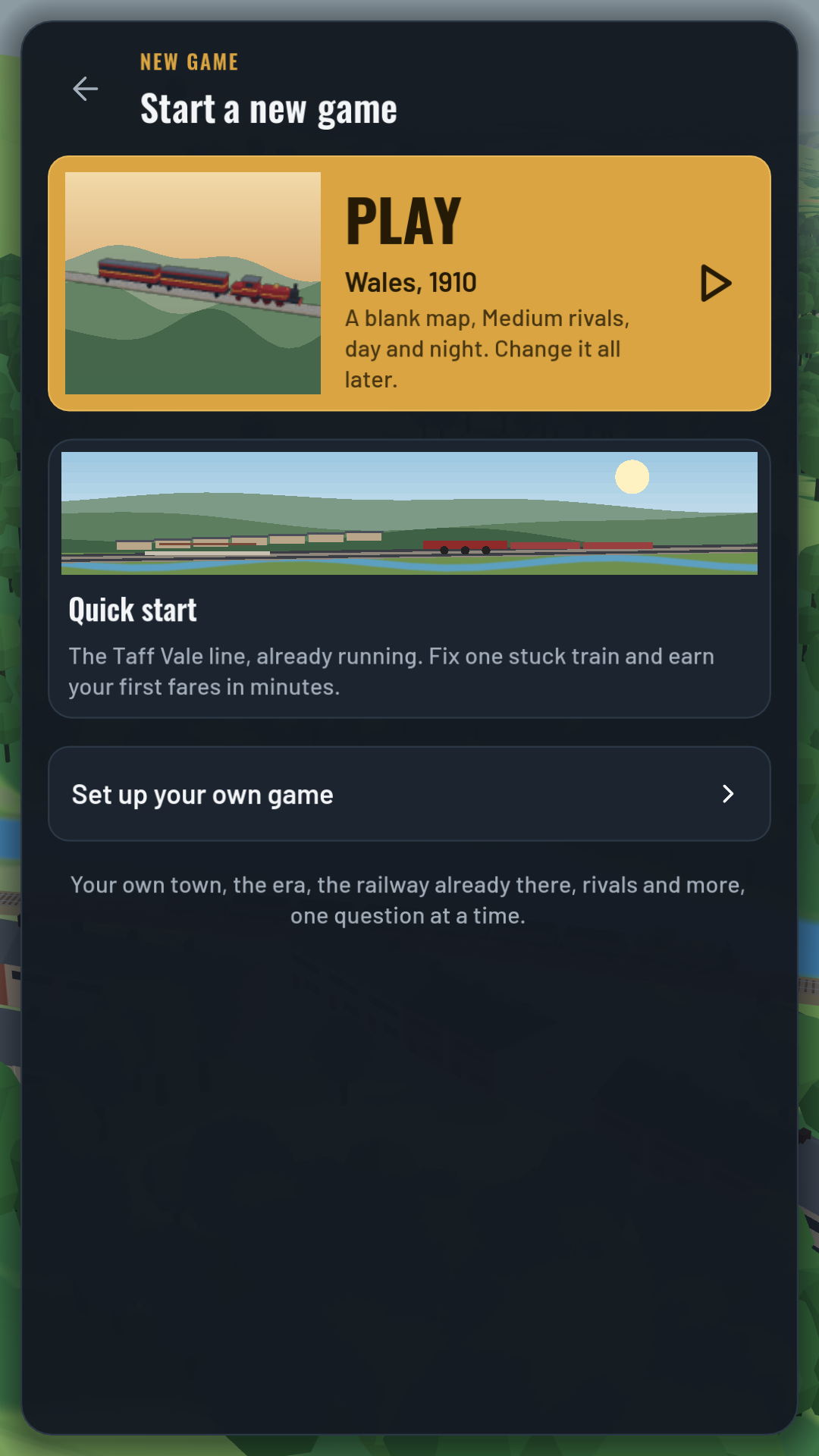
A new way to start
Tap Play and you're running trains in a minute. Or take your time: New Game asks one question a page, with a picture to tap and a choice already made, so you can go straight through.
Start with a railway
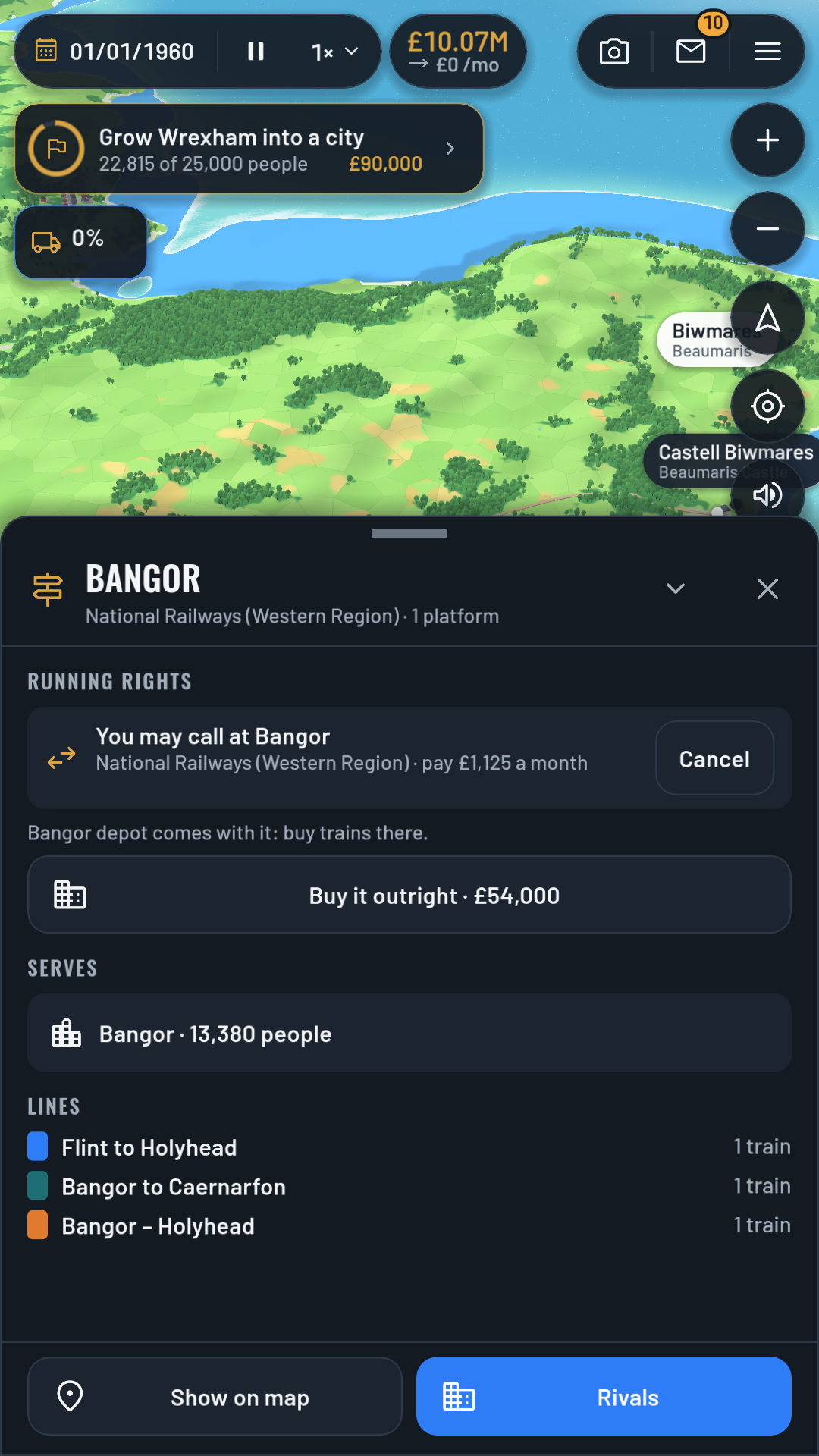
Start in a later decade and the railway is already there, in the real places, owned by the national railway. You rent its stations by the month, and your first train is leased, so a service is running before you've spent a penny. Or pick a blank map and lay every yard yourself.
Never miss a thing
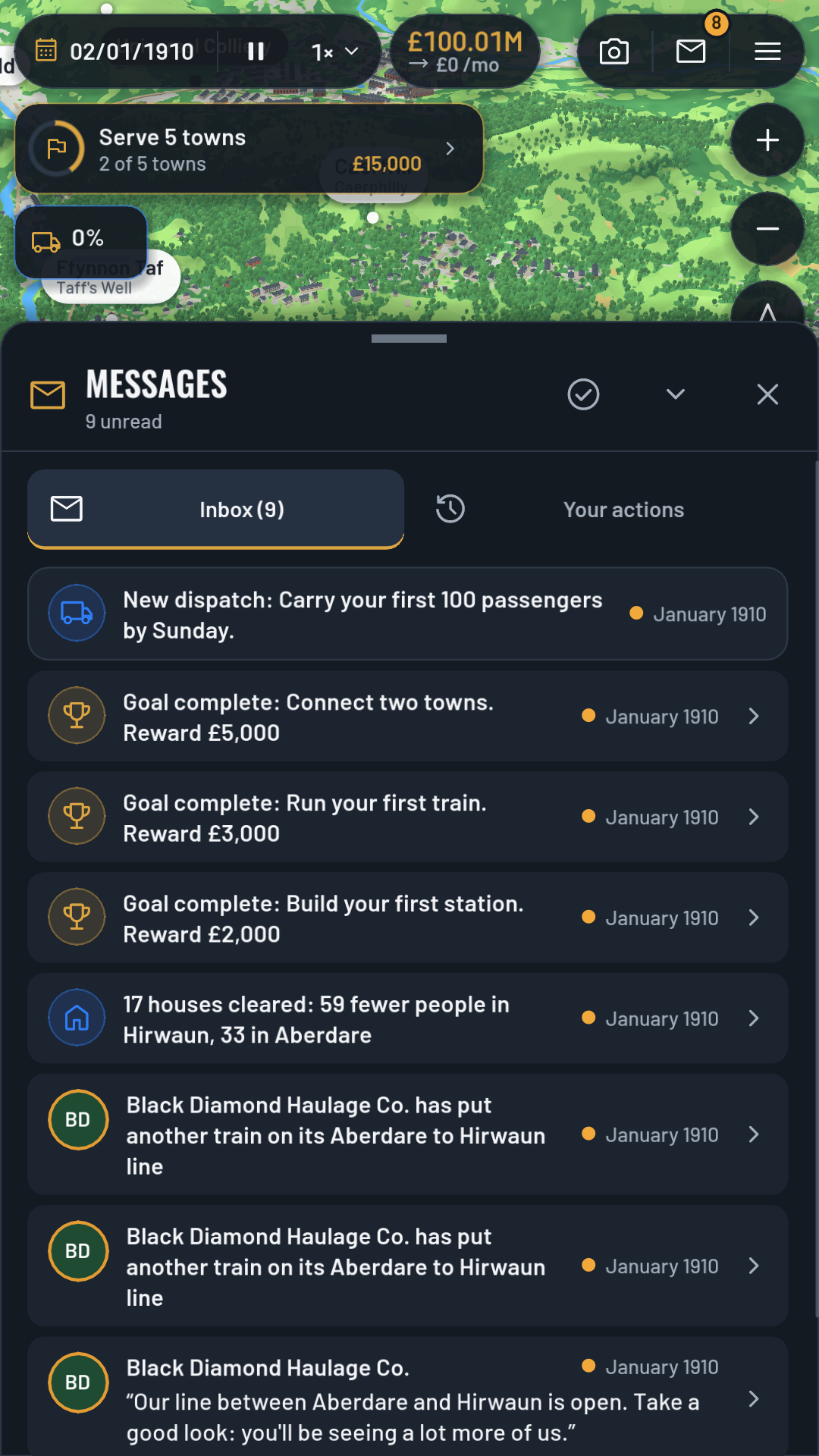
Every message is kept in Messages until you've dealt with it, and offers wait long enough to plan for.
A reason to come back
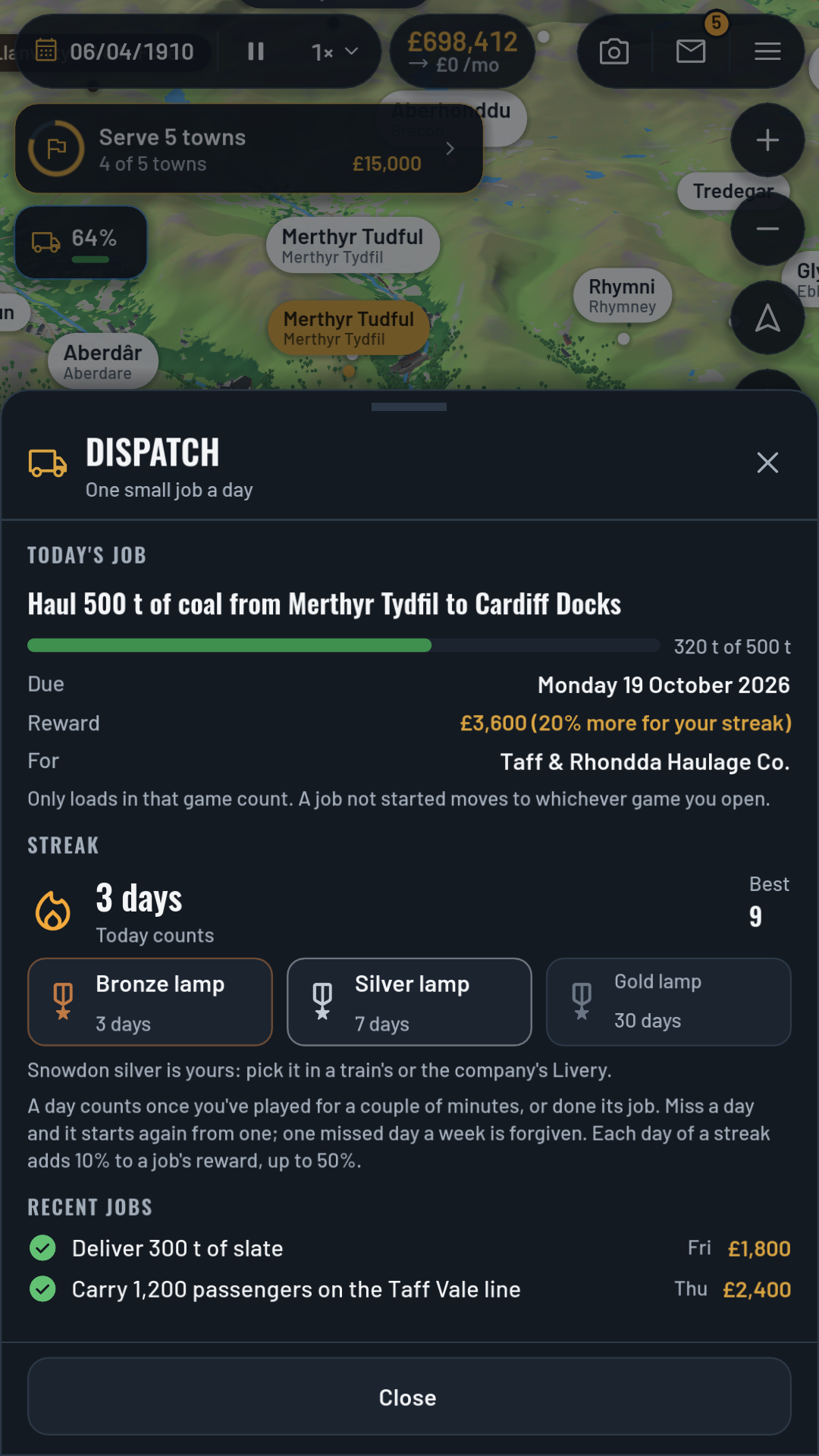
Dispatch picks a job from what your railway already carries, such as “Haul 500 t of coal from Merthyr Tydfil to Cardiff Docks by Saturday”. Nothing ever waits on it.
Second-hand market
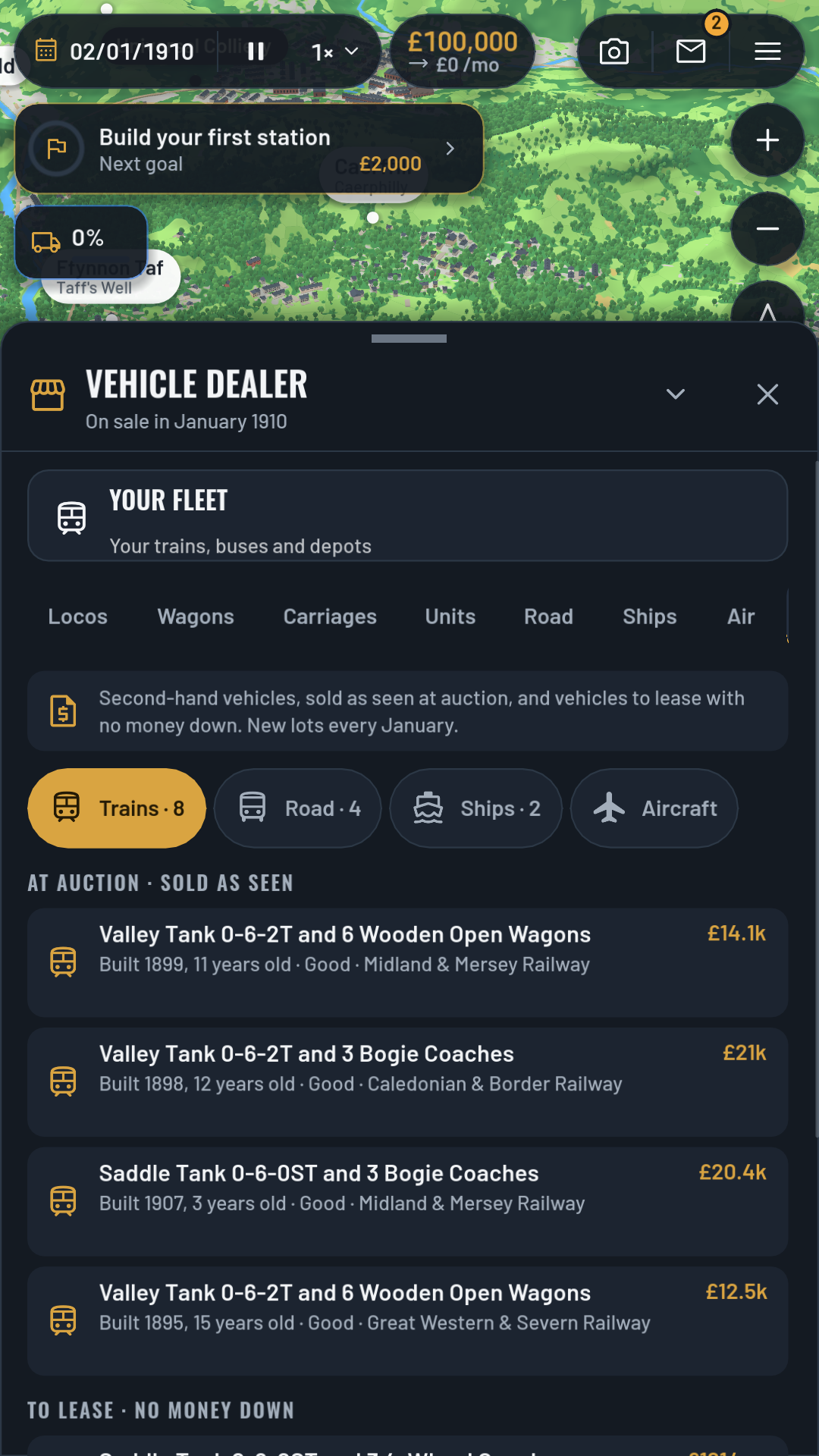
Trains, buses, lorries, ships and aircraft all get a second life. Trains cost more to buy than they used to, so a new company can lease first and buy once it has earned the right.
Rivals on the move
Rival companies no longer stay on the rails. They sail to Ireland, fly between airports and ask for a berth at your docks, and you can do all of it too.
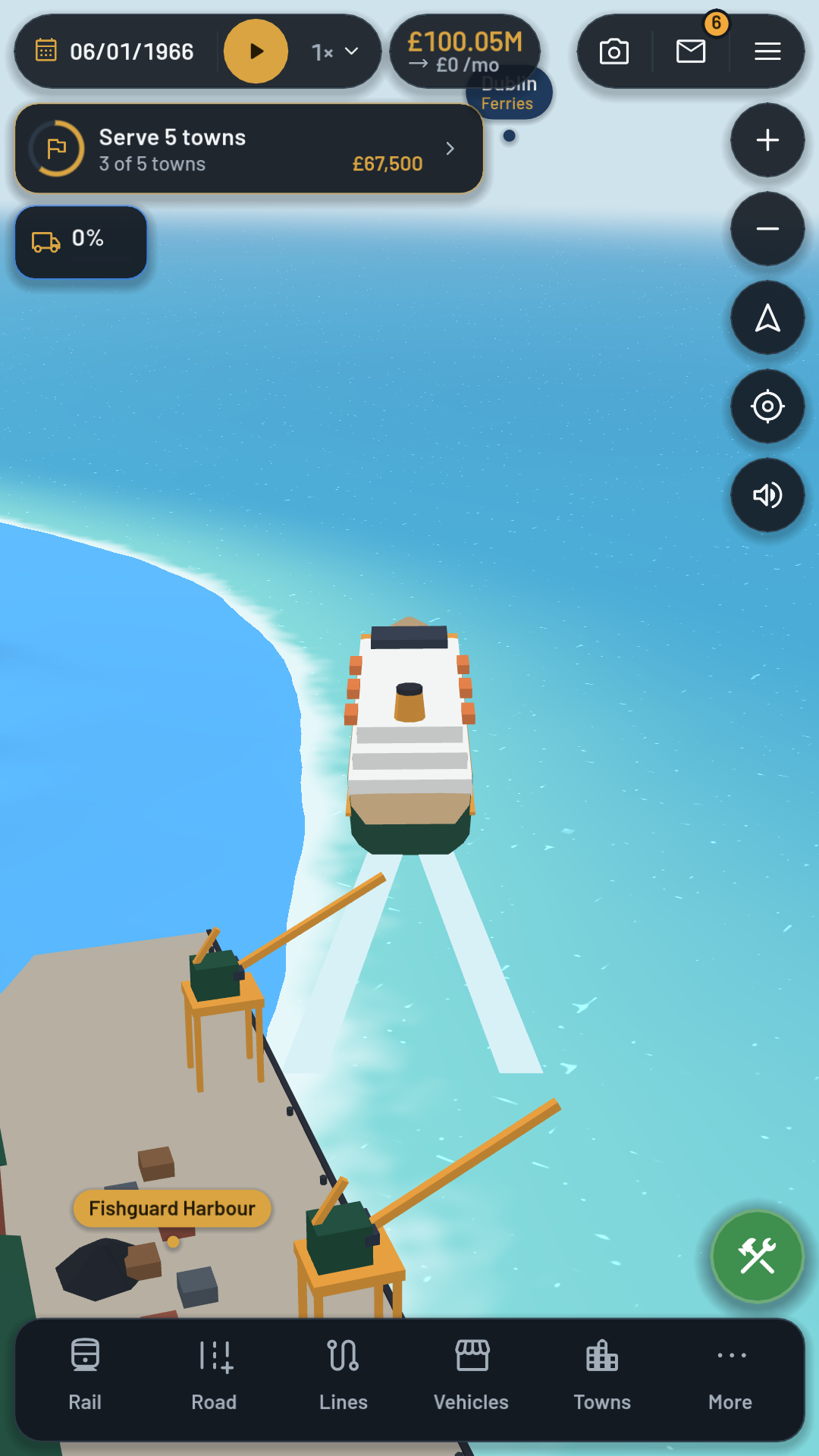
Run it properly
The city stations are the size the real ones are, and a line can now say exactly where its trains call and which platform they use.
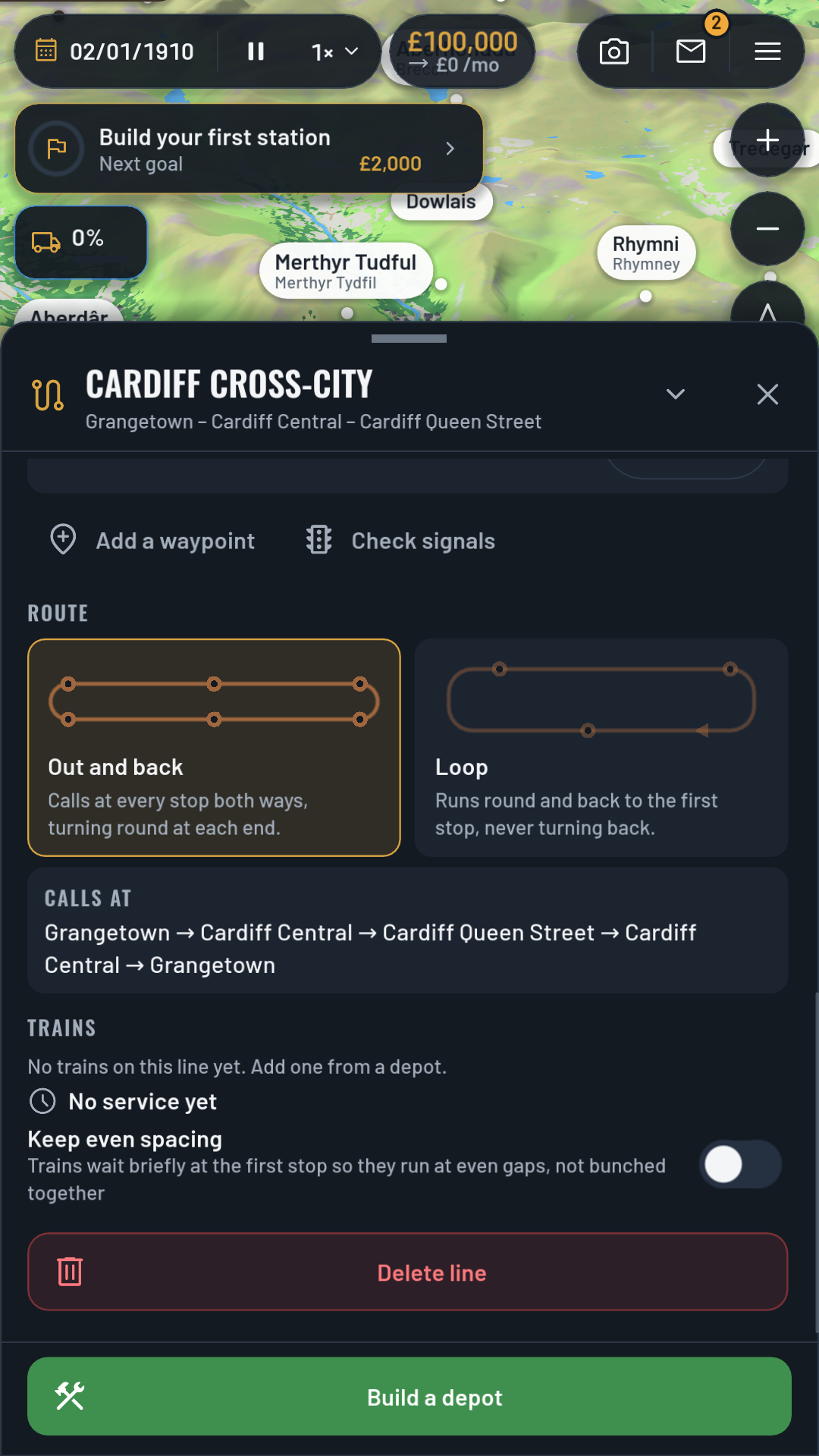
Share it
Send a view of your railway home, in Welsh and English, and look back on each era with a report card.
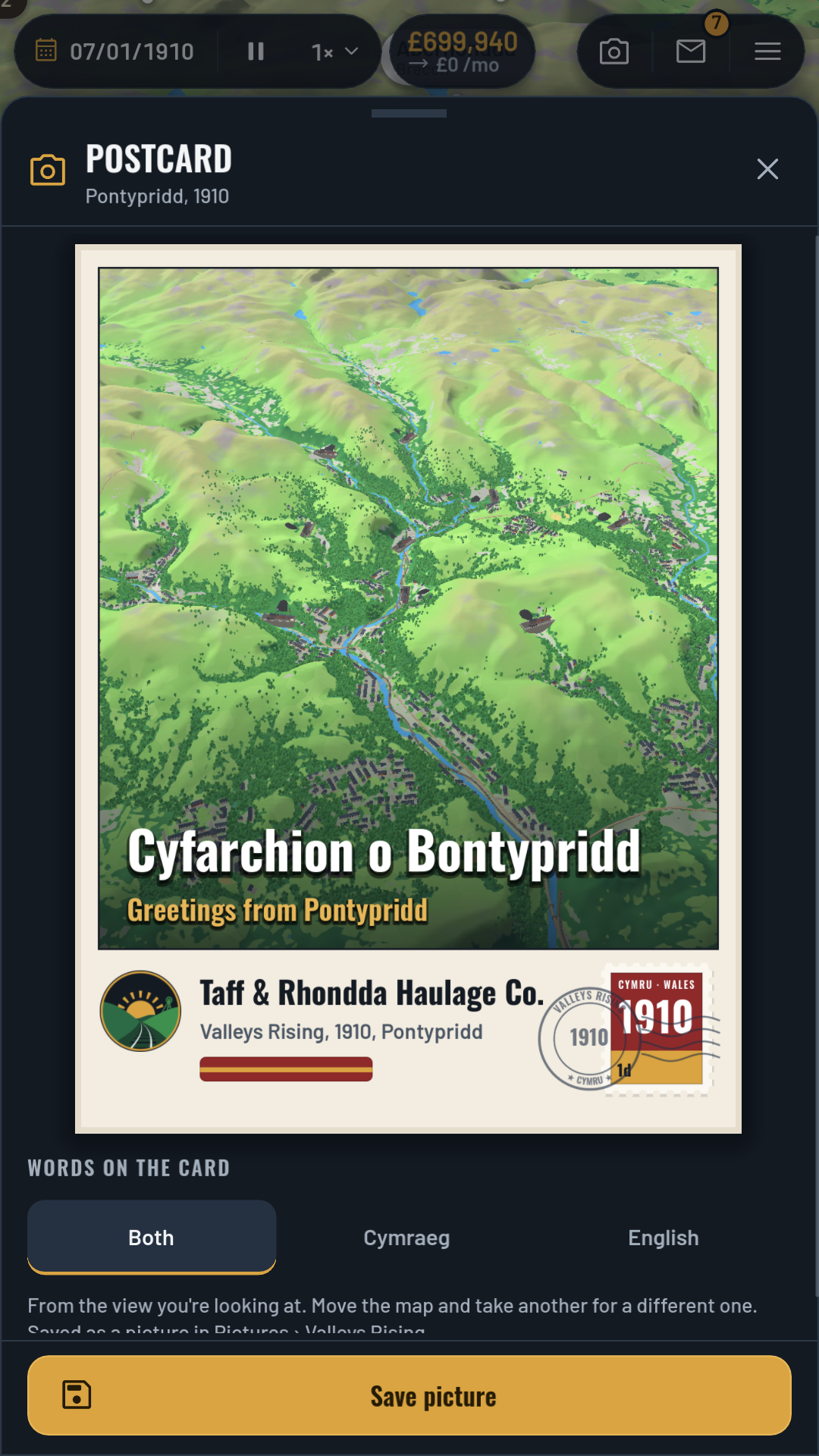
Name a station, a line, a train and its nameplate, in any letters, even â, ŵ and ŷ. Your names show on the map and in the news: “The ‘Gwen Thomas’ hauled the eisteddfod special to Llangollen.”
Rivals send their own news under their own crest, dry, neighbourly or brash by nature. Undercut their fares or spend on posters, and a month or two later they answer.
Open the game after a while away and your company has earned something in the meantime: a twentieth of its usual takings, up to a month's profit, and twice that with Premium.
A front page of a Welsh paper of the era, in Welsh and English, with one real thing that happened while you were away. It opens as part of Welcome back.
A town with no station offers a 3 to 5 year contract for a station and two trains a day to a bigger neighbour. Sealed bids, lowest ask wins, and you see every bid once they open.
Build a station in a town another company already serves and you pay the town to get in, more where it's well served. Where a company holds a town exclusively, ask to be let in, for a price.
Planes, helicopters and airports cost and run for three times as much, and passengers flown pay more. A full plane on a long route pays for itself in a year or two; an empty one hurts.
Buses and lorries cost more, ships cost about what a train does, bus subsidies are smaller, rivals last longer, and the Fast calendar no longer makes loans and leases harder.
Screenshots
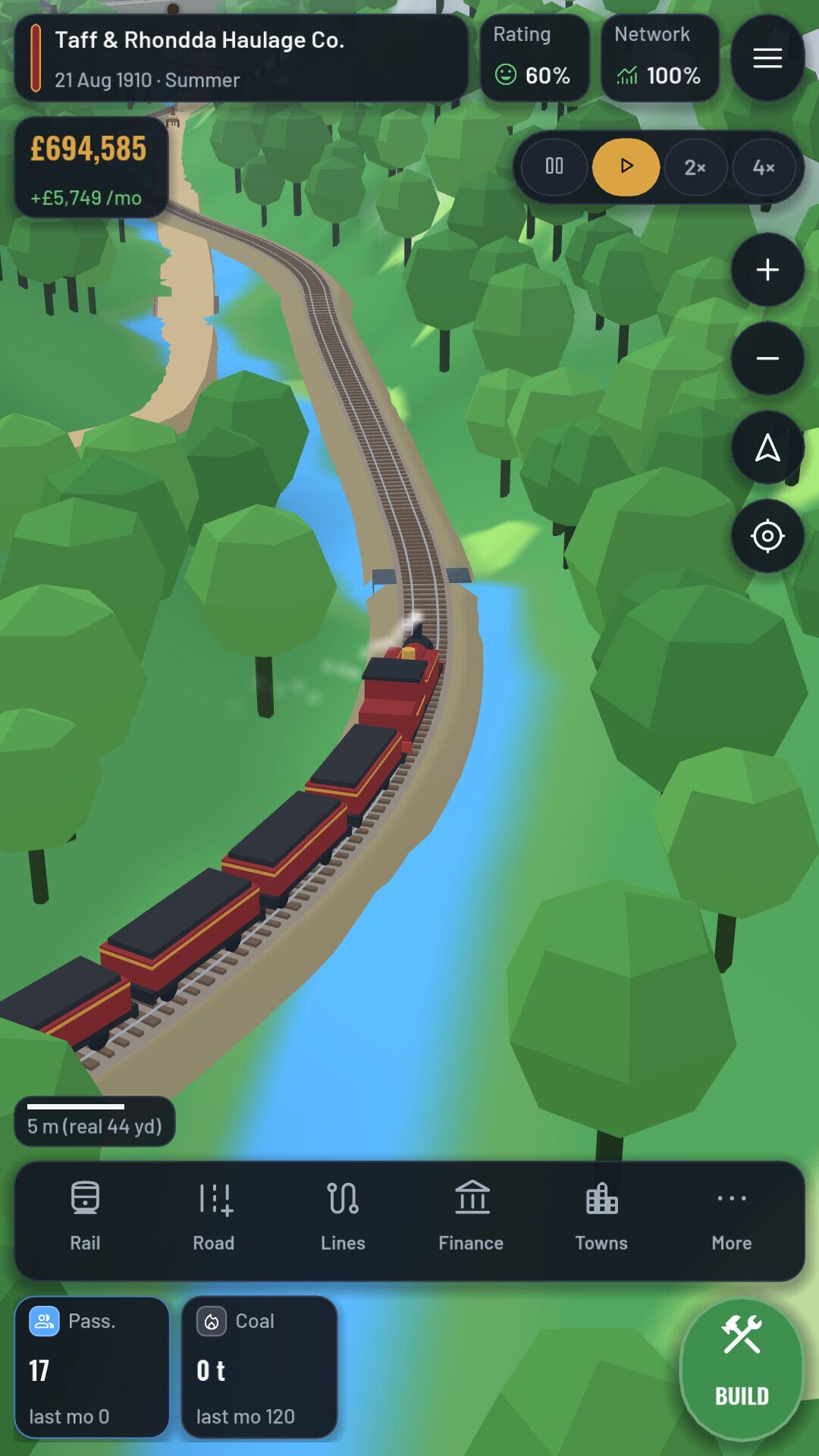
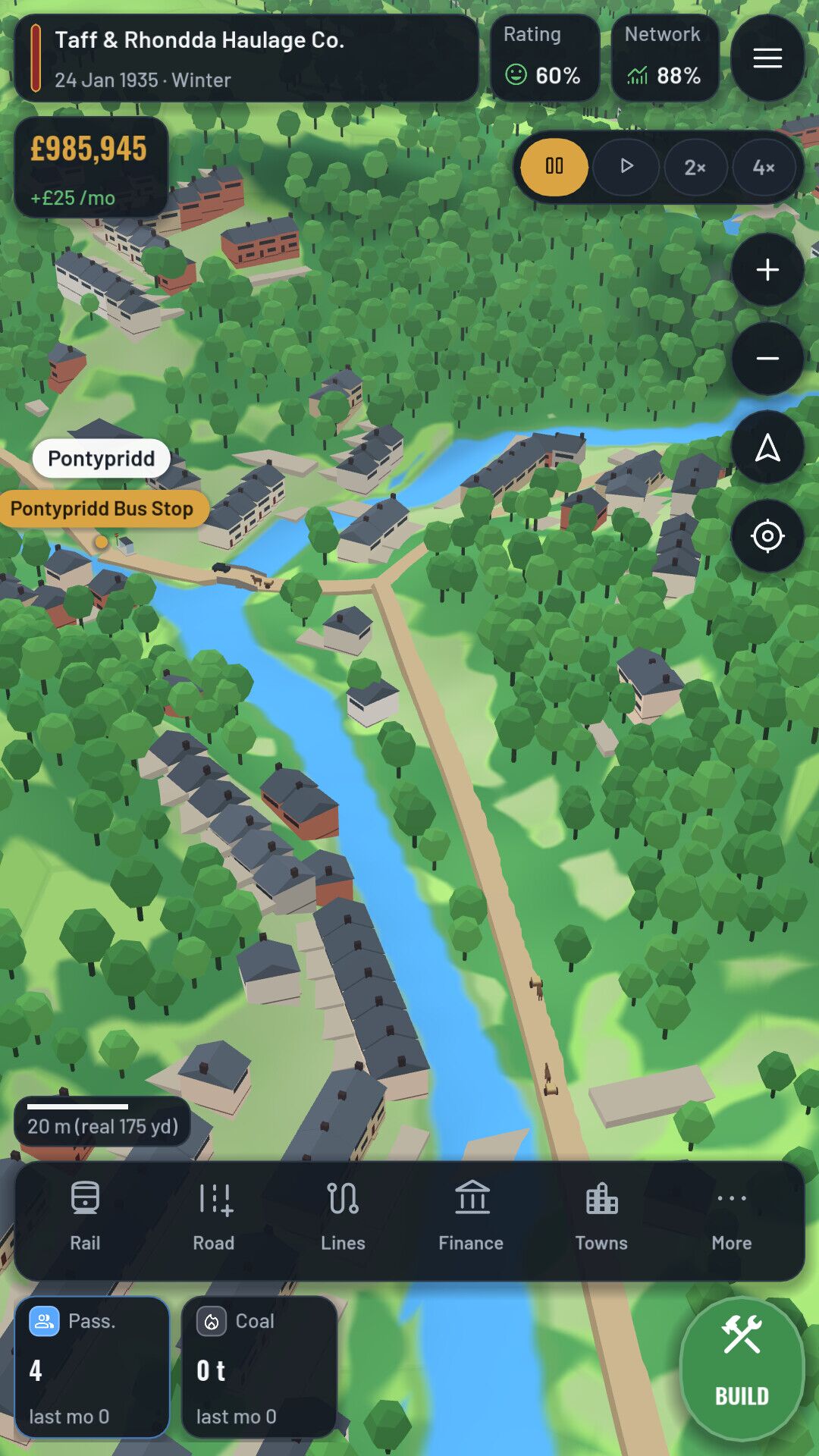
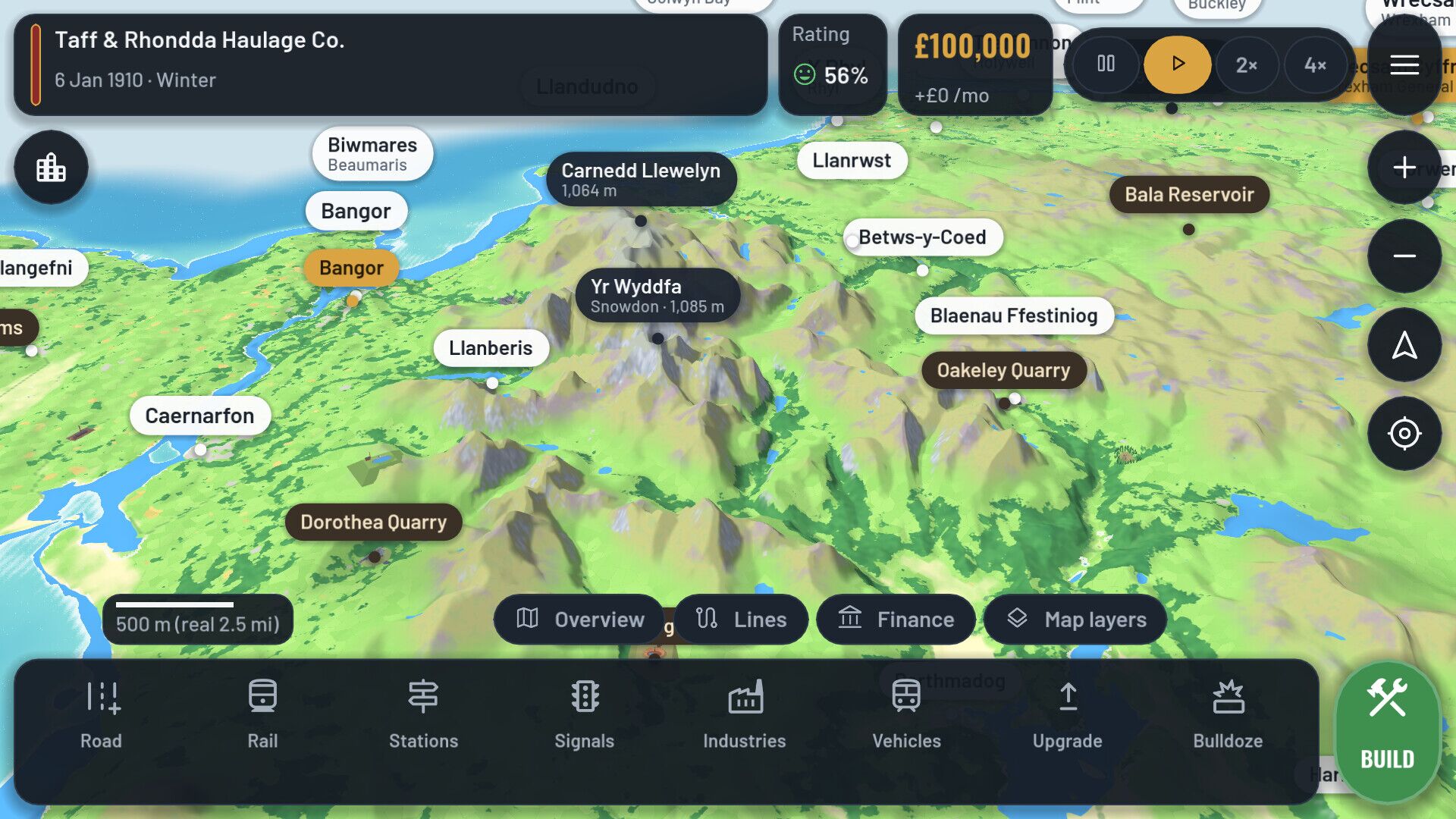
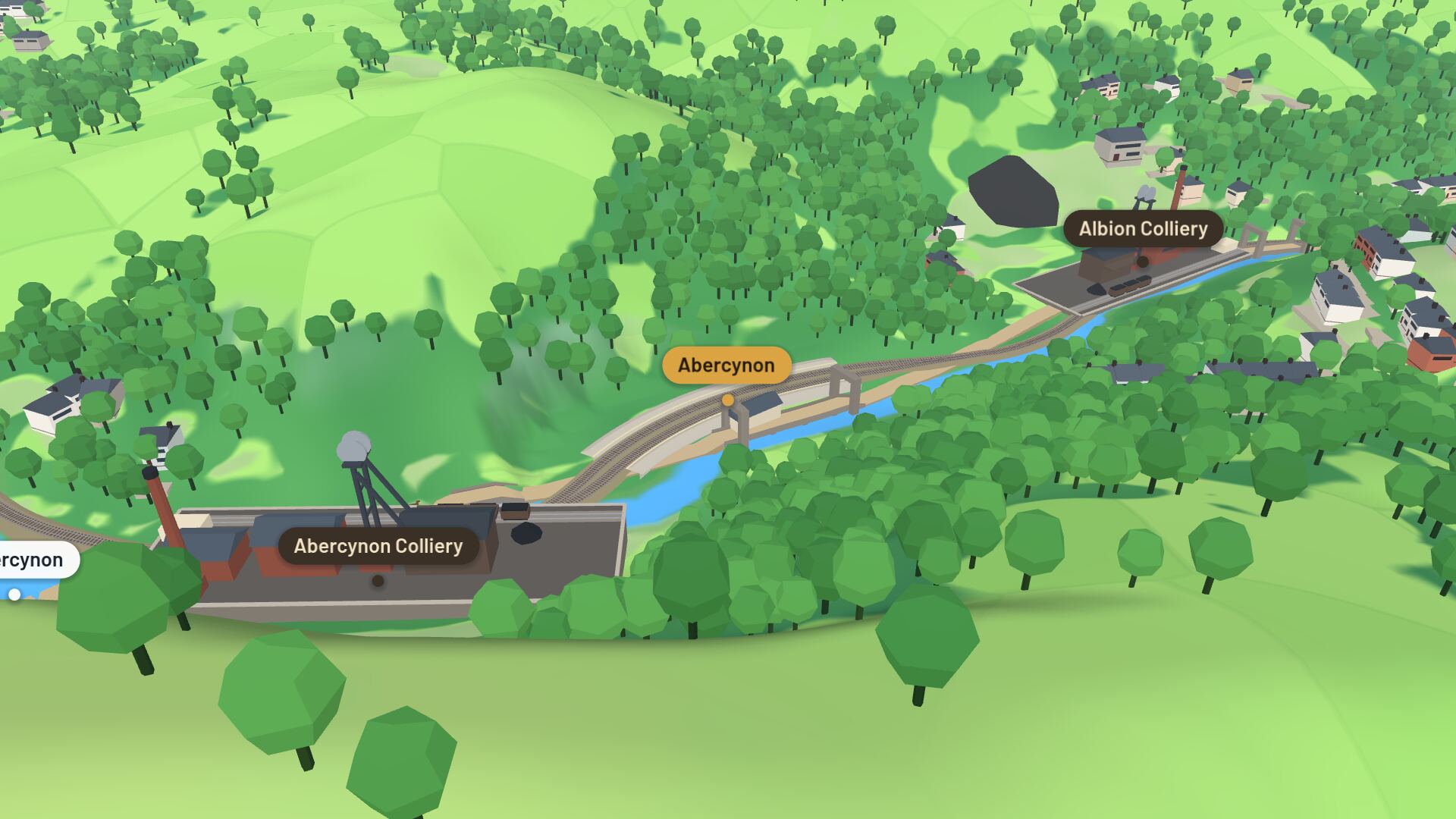
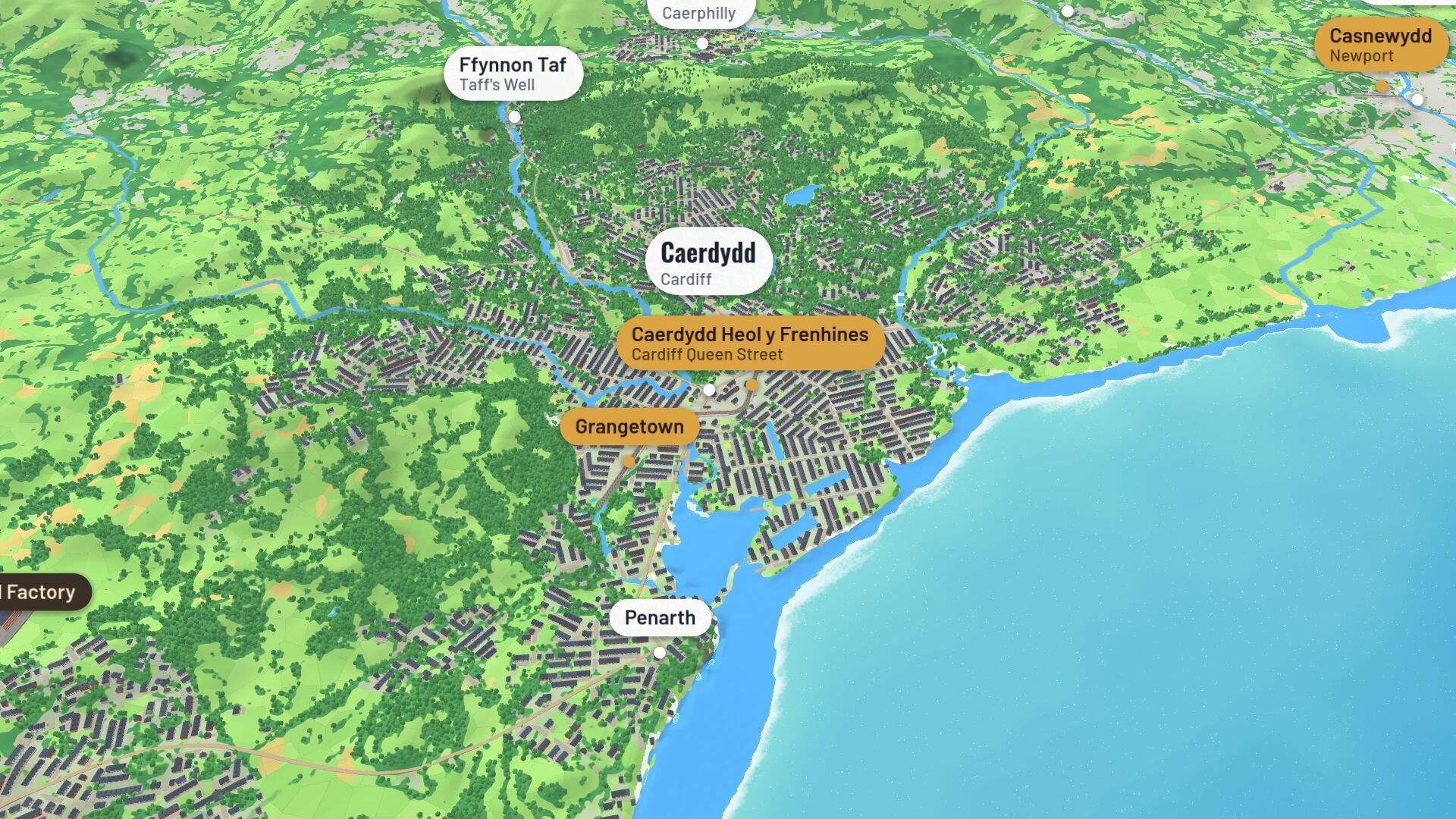
A century of change
New trains arrive, old ones wear out, and the towns and hills change with the decades. Start in 1910, 1960, 1985 or 2000, or play them all.
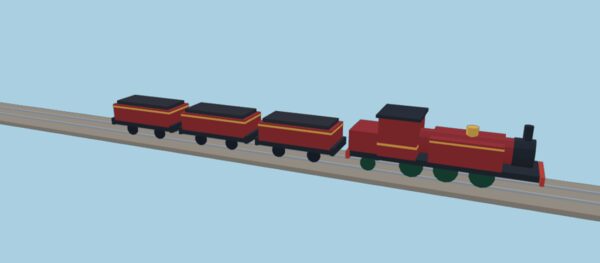
Saddle tanks on the colliery branches, horses and carts in the streets, and coal pouring down to the docks.
Saddle Tank, Valley Tank, County 4-4-0
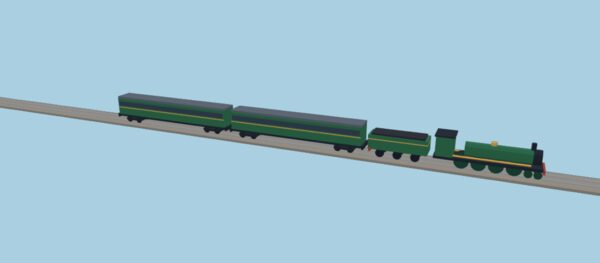
Express engines, the first diesel railcars and buses, and wartime demand at the munitions works.
Castle, King, Manor, Pannier Tank, Austerity
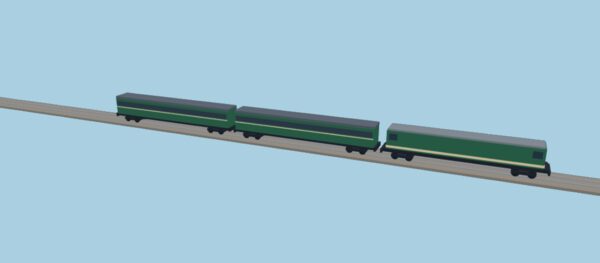
Diesel multiple units on the valley lines, the first electrics, and the motorway-age lorry.
Class 116 DMU, Class 20 and 37 diesels, Class 47, Class 86 electric, 9F
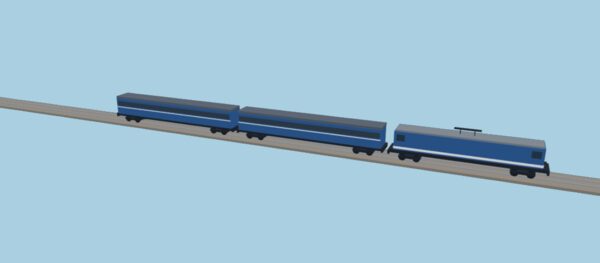
125 mph diesels, Sprinters and heavy freight, as the pits close and the valleys change.
HST, Class 150 Sprinter, Class 56, Class 60
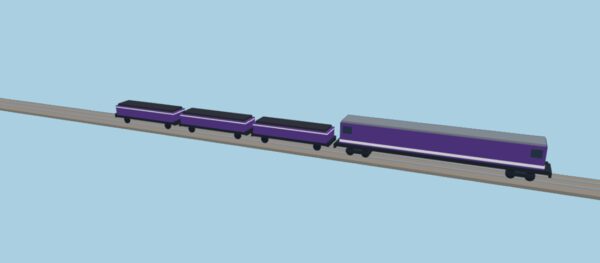
Bi-modes and tram-trains on electrified lines, low-floor buses, and a Cardiff Bay waterfront.
Class 66, Class 67, Class 800 Bi-Mode, Class 398 Tram-Train
Out now
For Android phones and tablets. No intrusive ads, no pay-to-win, and no internet needed once it's installed.
Download on Google PlayFeedback, questions or press? hello@valleysrising.com
Questions
On Google Play, for Android phones and tablets.
Valleys Rising is free to download and play, and almost everything you can do in the game you can do without paying a penny. Premium is an optional one-off purchase that doesn't cost much: it makes your life a little easier (3× and 4× speed, double income, Auto route, bigger loans, twice the welcome-back earnings, bigger port warehouses and more) and helps us cover our hosting costs. There are no subscriptions and nothing to buy again.
No intrusive ads. In fact there are no adverts in the game at all: no banners, no pop-ups and no videos to watch for rewards.
No. There's no premium currency, no energy timers and nothing to buy again and again. Premium is a single, optional purchase that speeds things up a little; every line, train and era is there to play without it, and your company grows on what your railways earn.
No. Valleys Rising is fully offline. There are no accounts and no sign-in, and the app doesn't even ask for permission to use the internet, so it plays the same in a tunnel as it does at home.
Not other players: the game is offline. But from your first month a railway company run by the computer opens in a part of Wales you haven't reached, and sometimes a second one later on. They build between your sessions, compete with you for passengers, talk to you in their own words, and will let you run over their track, or run over yours, for a fee. Some open ferries to Ireland or flights too, and you can do the same. You can buy them out. Switch them off when you start a new game if you'd rather play alone.
No. 1910 is the default, but New Game lets you start in 1960, 1985 or 2000 instead, in your own town, with that decade's trains, prices and towns. You can lay every yard of track yourself on a blank map, or join the railway that's already there and rent its stations by the month.
When you come back after ten minutes or more, your company has earned a share of what it makes while you play, for up to twelve hours away: a twentieth, up to a month's profit, for everyone, and twice that with Premium. If you come back on a later day, at least six hours on, Welcome back also opens a newspaper front page with one thing that happened, such as a locomotive on sale early or a town asking for a link. Nothing is lost while you're away, and nothing waits on a streak.
Now and then a town with no station offers a contract: build a station there and run at least two trains to a bigger town nearby, and it pays you. Everyone bids in secret for six months, including the computer rivals, and the lowest ask wins. You get a fifth on signing and the rest at the end of the term if the service kept running.
Only if you ask it to. They're off until you turn them on, and then it's at most one a day, about what your game reaches next (a new locomotive, a new era, Dispatch's next job), and none after a week without play. They're made on your phone and nothing is sent to us.
Android 7.0 or newer, on phones and tablets, in portrait or landscape. It's designed for mid-range phones, and its battery saver helps on long journeys.
Not yet: Valleys Rising is on Android only for now. If that changes, it'll be announced here.
Place names are shown in Welsh and English, or in either one, as you prefer. The menus and text are in English.
No. It collects nothing, and your saved games stay on your device. See the privacy policy.